Showing posts with label Seattle rental income. Show all posts

Wednesday, October 19, 2016

Anatomy of a Deal

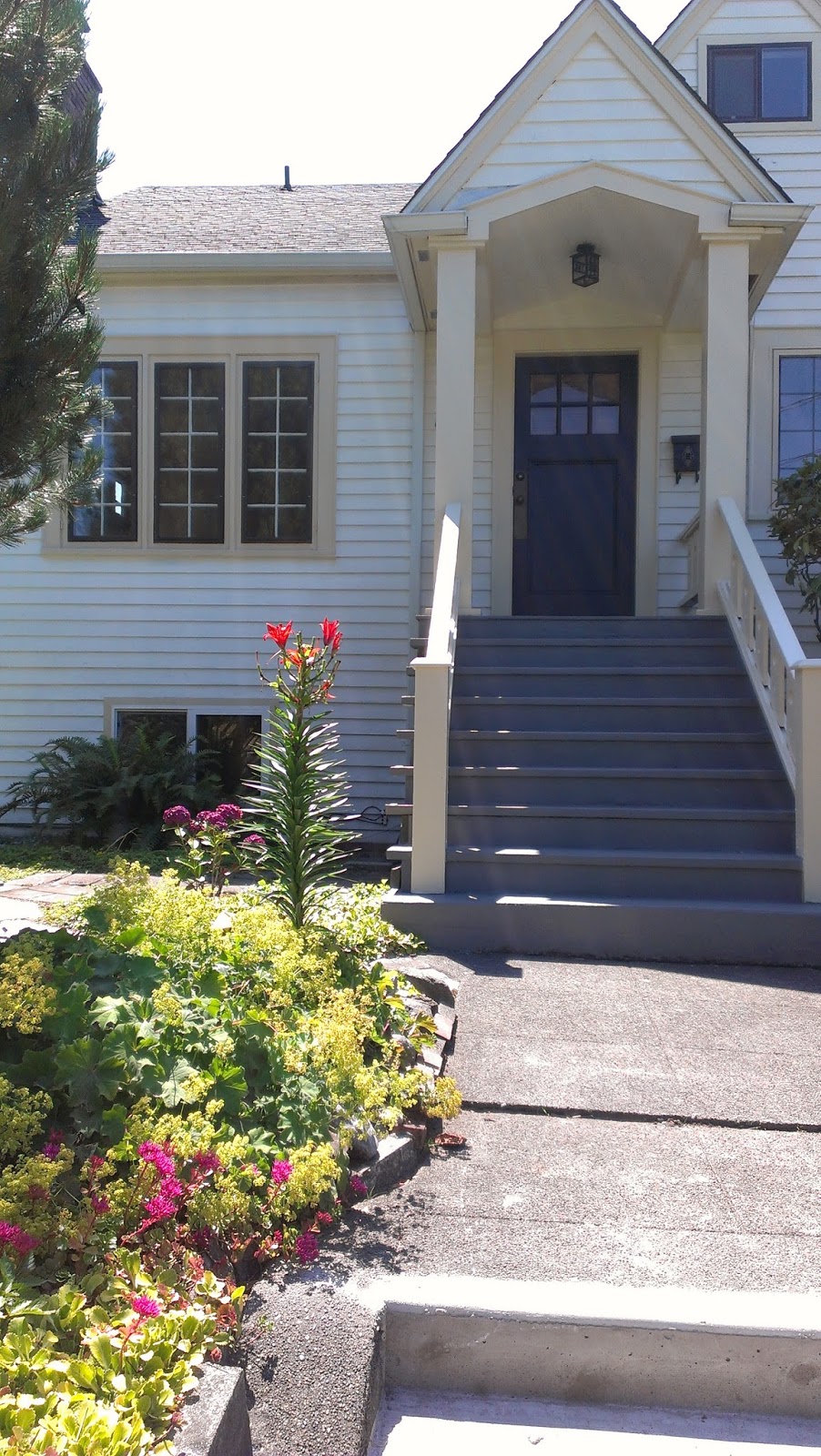
Four years ago I bought a single family house in the Ballard neighborhood of Seattle for full list price on the Northwest Multiple List Service. The common wisdom is that nothing in Seattle cash flows (it is mostly an appreciation market), that there are no investor deals on the NWMLS market, and that one cannot make money paying full retail. All of these assumptions are false.

This house had four bedrooms/two baths on the two upper floors, and one bedroom/one bath in the attached mother-in-law unit in the basement. The elderly seller had previously rented out the entire house for $2300/month. She was having trouble selling this property and it sat on the market for over a month, primarily because all doors seemed to lead to the kitchen (4 entry points), and the main bath had a jetted walk-in tub - expensive to buy or to remove, but great if you are into hydro-therapy.

It was listed for $409,000 in 2012, which is what I offered in price. The Seller was willing to consider owner-financing, with $35,000 down on a seller note at 5% simple interest only, cash-out in five years. Monthly payments are $1558.33.

An inspection revealed a crack in the sewer line to the street, which the Seller repaired prior to closing.

My $35,000 down payment came from a private lender (whom I subsequently cashed out about a year later). My $12,000 real estate commission was used to pay closing costs, and make repairs. So basically, I was able to purchase this property with no mortgage, no credit check, and no money out-of-pocket.

I moved things around in the kitchen and was able to block off one of the entry points there; painted the interior; and remodeled the MIL to make a more habitable space for an on-site property manager.
I converted the new sunroom to a bedroom by adding a wardrobe closet. Then I furnished the common areas, and rented out each room on a monthly lease agreement. Currently I collect $4225 in monthly rents, so cash flow is approximately $2000/month.

My on-site property manager pays rent, but gets a discount for property manager duties.

Property management duties include collecting and depositing rent, showing vacant units to prospective tenants, doing move-in/move-out walk-through, advising owner of needed repairs or tenant problems, advising tenants of energy conservation efforts, ordering common household supplies, yard work, coordination with contractors as needed. I rarely go to the property or meet the tenants in person.
It is true that Seattle is a great appreciation market, and I conservatively estimate that equity in this property has gone up by at least 50% in the time I have owned it. So there is at least $200,000 of equity in a SFR property that cash flows $2000/month. That, folks, is a home run.
Such opportunities are not always easy to find, but they are out there. Keep looking, and use your creative acquisition tools to hit your own home run...
Happy Investing!

Wednesday, September 21, 2016

ADUs vs DADUs

THE DIFFERENCES BETWEEN ADUs AND DADUs

If you’re thinking about building an ADU or DADU, there are several factors to consider. As noted above, both share many advantages, but the following are additional issues to consider:

Accessory Dwelling Unit

§ Can provide rental income

§ The space and building systems already exists - construction expense is greatly reduced

§ Does not impact scale or character of neighborhood and often goes unnoticed

§ Does not impact open space of property

§ Unit can often be directly connected to house if so desired (family members)

§ Can be a quick return investment

§ Since the unit is attached, sounds will likely be heard regardless of sound-proofing efforts

§ Privacy. You’ll likely be sharing some exterior spaces and possibly even some interior


Detached Accessory Dwelling Units

§ Can provide rental income

§ Increased privacy and no shared walls and floors/ceiling

§ Clear boundaries can be delineated between units

§ Cost. Building a DADU is significantly more costly per square foot than building a house

§ Takes away from yard and open space

§ Potential to impact neighbors open space and privacy

LESSONS LEARNED

Below are "before" and "after" floor plans of an ADU we recently completed. As with most ADUs we’ve designed, the basement was finished space and only required minor interior renovations. A small, compact kitchen was added along with a new closet for a stacked washer/dryer, and sound attenuation and fire separation was added to adjoining house walls and ceilings. In addition, access to an electric sub-panel and thermostat was added for independent control of the building systems within the unit. And the best part - no exterior work was required. This ADU has 485 SF of rentable space, will be used as a long term rental, rents for $1,200 / month and cost $35,000 which included all project costs.


DADUs are wonderful - who doesn't love a tiny house (?!) but ADUs are typically a bigger bang for the buck. Based on the ADU project we've designed, returns on investments have ranged from 2 to 4 years.

How to finance? We'll be exploring this topic in our next blog. Stay tuned!

Happy Investing!

Today's blog courtesy of David Taber, Neiman Taber Architects


Tuesday, September 20, 2016

Increasing Affordable Housing

WHY ADUs and DADUs ARE A GOOD THING

For the City

They increase affordable rental housing, utilize existing house stock without compromising the scale and character of neighborhoods, encourage better housing maintenance and neighborhood stability, reduce sprawl and environmental footprint, and are viable alternative to larger scale housing projects

For the Homeowner

They provide rental income, offer a private living unit for family members or friends, create aging in place opportunities and increase property values

For the Renters

They offers affordable rent and access to amenities in single family neighborhoods such as privacy, quieter environment and less traffic congestion

More in tomorrow's blog about the policy changes proposed by the City of Seattle. Stay tuned!

Happy Investing!

Today's blog courtesy of David Taber, Neiman Taber Architects